


Perfume: A journey into the history of perfumes and its production
“The purple sails were so fragrant that their scent made the wind adore.” In this description, Shakespeare referred to a legendary story: Cleopatra, the Roman Queen, poured a lot of her perfume on the sails so that Mark Antony, the Roman King, could smell the queen’s scent before she arrived. The history of perfumes and colognes goes back about 4,000 years.
If you are interested in knowing how to make the Queen's perfume so fragrant, this article will help you. Here are the details of how perfumes were first created in the world and how they became famous and popular.
History of perfumes in the world: Where was the first perfume made?
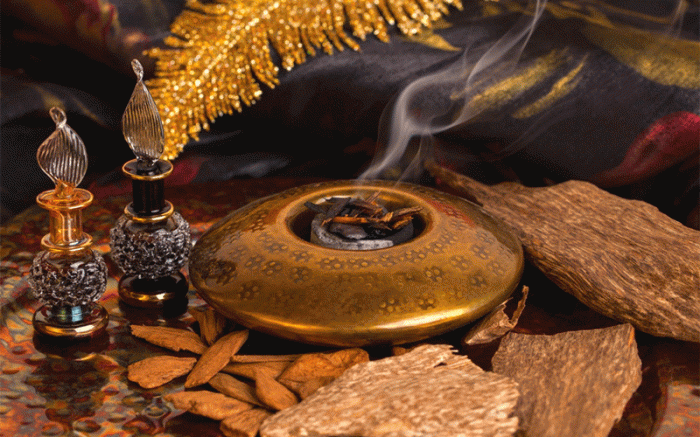
Burning incense was considered the first use of perfume in the world. The method dates back to 4000 years ago, during the period of Mesopotamian civilizations. For this reason, the origin of the word Perfume goes back to the word Fume, which means smoke, vapor, or gas.
On the other hand, the uses of aromatic materials, such as burning incense and herbs for religious rituals, were common among the ancient Egyptians, as they believed that burning spices and aromatic materials had positive energy, pleased the gods, and was used as a means of treatment for diseases and personal perfume. Therefore, they used burning gum and mountain plants in homes and temples. Burning aromatic plants and incense remains popular to this day.
One of the types of incense that Egyptian priests burned in the temple was Kyphi. It was made from 16 ingredients: the resin of several tree species, cypress (a type of aromatic grass), wine, honey, mountain cypress, raisins, and some other ingredients.
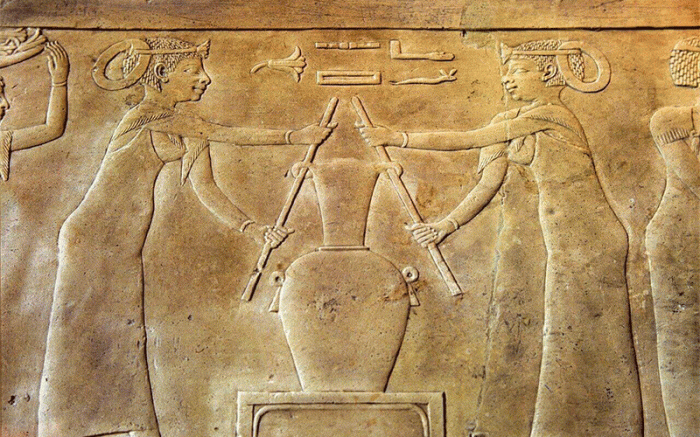
The Egyptian aristocracy, pharaohs, and clergy were so fond of perfumes that they used the perfume to mummify the dead. The smell of perfumes used in the tombs of the Pharaoh was so strong and fragrant that when these tombs were opened in 1897, archaeologists were able to smell a scent called the “perfume of immortality.” The Egyptians used a lot of jasmine, frankincense, white lily, and honey in making their perfumes, and interestingly, these elements are still among the most important ingredients in perfumery.
Perfuming ceremonial wigs with fragrant cones of balsamic ink was considered the height of elegance, as were scarves. This perfume was reserved for dignitaries in society, and people were also satisfied with castor oil mixed with oregano or mint.
The history of perfume in Greece and the Roman Empire
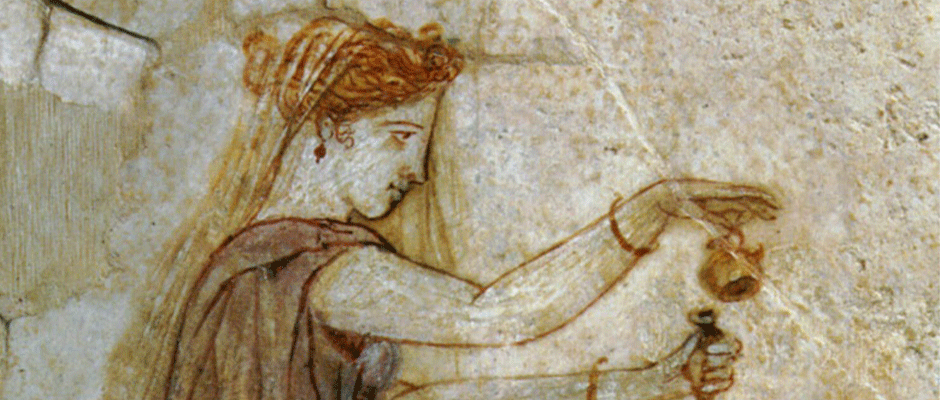
The Cretans and Phoenicians benefited from the Egyptians' experience in making perfumes and transferred them to the Greeks. They were able to discover new aromatic materials, such as saffron, thanks to their extensive trade throughout the Middle East. During that period, the Greeks were experiencing commercial and cultural prosperity, which led to the development of the perfume industry, as the Greeks created the first liquid perfumes for use on the body. Of course, these perfumes were completely different from today's perfumes. In fact, these liquid perfumes were aromatic powders mixed with oil, and no alcohol was used.
By crushing aromatic plants, gums, and other plants and mixing them with various oils, they discovered a new way to make perfumes that they could use on a daily basis. To the ancient Greeks, aromatic substances were as valuable as gold, so much so that perfumes were taken as war spoils during Alexander's invasion. The Greeks were very fond of perfumes and spent a lot of money on them.
Therefore, in the sixth century, due to the high cost of importing perfumes to Greece, the Greek king banned the use of perfumes to save the country's expenses. However, this ban did not last long. Gradually, the Greeks became real experts in the production of aromatic liquids. They used Enfleurage technology, which is a method of impregnation using heat. They soaked the flowers in bronze vases filled with oil.
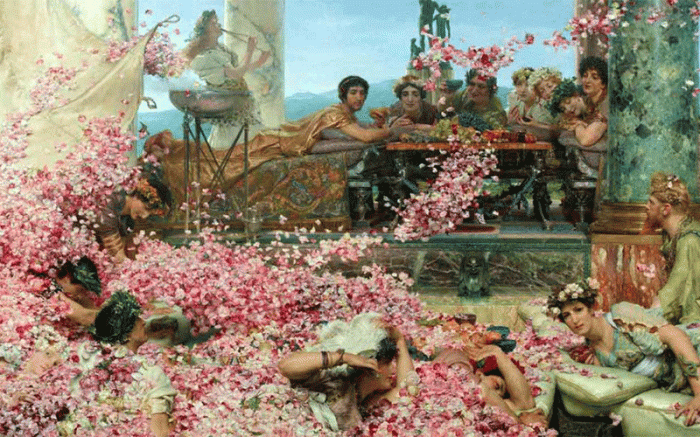
In the Roman Empire, which was full of splendor and luxurious life, the nobility and royal family had a special interest in luxury and the use of perfumes; they made waterfalls of rose water to perfume the space. So that the Roman Emperor, King Nero, prepared tubes in which various long-lasting perfumes were flowing and had a smell similar to the smell of rose water. There were also many perfume shops in ancient Rome and a perfumer's quarter called "unguentarii".
According to the discovered cuneiform tablets, the first perfume maker in history was a woman named “Tapputi,” who lived in Mesopotamia in the second millennium BC, about 3,200 years ago. Tapputi was also described as a registered chemist and perfume expert.
The first Arabic perfume
In the 9th century, the Arab chemist Abu Yusuf Ya'qub al-Kindi wrote a book on perfumes entitled Gentleness in Perfume. Which contains about 107 methods for making perfumes. It is worth noting that the Iranian scientist Ibn Sina was the first to invent the method of distilling flowers!
In his book “Effectiveness in Perfume,” also known as “The Chemistry of Perfume and Sublimations,” Al-Kindi explained how perfume is made, its equipment, and the method of distilling essential oils and medicines from these oils.
Perfumes in the Renaissance: The beginning of professional production of perfumes
Before the Renaissance, Europeans lost their interest in perfumes and were replaced by Arab and Islamic countries. As we mentioned previously, the Islamic scholar Ibn Sina was the one who invented the distillation of roses while obtaining aromatic oils. After the end of the Crusades, Christian soldiers returned to their homelands in Europe with antiques from the Middle East, among which were a large quantity of various perfumes and essential oils.
Therefore, the Renaissance era is a major period in the history of perfumes because it represents the beginning of the aromatic scents that they took from the Arabs, such as amber, jasmine, vanilla, cocoa, pepper, or musk. In this era, people, especially the rich, liked strong perfumes that indicated their social status, and the closer you got to the Age of Enlightenment, the more subtle the scents became.
Great sailors imported new aromatic products from America and India, and the quality of essential oils improved due to developments in chemistry. The invention of poisonous scientists in distilling perfumes and extracting essential oils extended to Europe in the twelfth century, especially in the year 1221. The Italians excelled in formulating it, and the Hungarians were also able to mix it with alcohol, which is the substance that is still used in its manufacture, in the year 1370 AD by order From Queen Elizabeth of Poland, wife of King Charles I, this mixture was given the name “Hungarian water.”
Venice and Florence became among the famous perfume manufacturing centers in Italy. An Italian perfumer named Rene Florentine developed perfumery in Italy. He produced rose, neroli, and bergamot scents exclusively for Catherine de Médicis, a wealthy Italian woman. After her marriage to King Henry II of France, the art of perfumery came to France from Italy.
Queen Catherine also loved leather gloves. To get rid of the smell of tanned leather, she used a special perfume on her gloves. Catherine hired the famous Italian perfumer Rene Florentine to create her perfumes. Catherine ordered the construction of a secret passage between her suite and her perfume laboratory so that no information about her exclusive formulations would be leaked. Ultimately, this led to the development of the perfume industry in France.
History of perfume in France: The largest perfume factory in the world
In the seventeenth century, the French believed that water caused the transmission of diseases. For this reason, French nobles believed that bathing would lead to their illness and death. This belief reached the point that the French King Louis XIV, during his 77-year-old life, only went to the bathroom three times. The king's palace servants used perfume to perfume the Palace of Versailles to hide the unpleasant odor resulting from the lack of cleanliness in that period.
Louis wanted his shirts to always be scented with fragrant perfumes, one of which was Aqua Angeli; the composition and preparation of it was very complex and time-consuming.
The method of making this perfume was as follows:
A mixture of agave wood (the aromatic pulp of the tree), nutmeg, storax (a type of sweet-smelling tree gum), cloves, and benzoin (another type of tree gum) was boiled in rose water for cooking. Then this mixture rests for a day and a night, then jasmine flower water, orange blossom, and finally some musk pieces are added to it.
After the French Revolution, Napoleon Bonaparte took an exaggerated interest in perfume. Unlike previous kings, in addition to bathing every day, he consumed more than 50 bottles of perfume every month.
In the 19th century, we witnessed the spread of perfumery and the beginning of developed chemistry. Vanillin, coumarins, and aldehydes are those that are tested in perfumes in laboratories, which revolutionize the perfume industry and enrich the aromatic pyramid with new notes. Using synthetic products, the first major "modern" brands emerged. This prosperity was also due to large glass factories that produced bottles in large quantities and led to the development of famous perfumes such as Guerlain, Houbigant, and Biver.
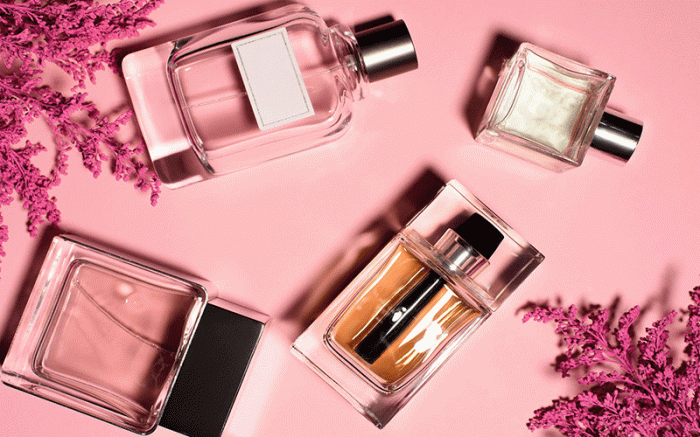
Although France was not the first country in which perfumes were manufactured and used, it has become a producer of the best and most famous perfumes in the world. Famous perfumes such as Dior Savage perfume from the Dior brand, Cocochanel, Ninarichi, CREED Aventus, Hermès, and Captain Black are famous French brands. The history of every perfume in France has a story worth revealing. For example, Dior perfume dates back to a time when there was almost nothing left in the name of fashion in Europe after World War II. In this case, Christian Dior was able to revive the French perfume industry by creating the first Dior perfume in memory of his sister, Catherine Dior.
The takeaway
Perfume and its industry witnessed the greatest changes and developments in the mentioned periods, as we discussed in this article. From the 1950s until today, people can find all types of perfumes, from cheap and ordinary perfumes to very luxury brands. Today, the process of producing perfumes has become very simple and, at the same time, advanced So that the scent of rare plants is artificially simulated in various ways and made available to everyone.
Perfumes have been an integral part of human life from the beginning of civilization to the present day. People's sense of smell is directly related to their memory and other feelings, and good smells always remind people of good memories.
Be the first to write a question
Related posts
- top 10 best selling perfumes in the world 2024
- 12 Best Long-Lasting Perfumes for Men: Strong Scents That Last
- top 10 best-selling perfumes in the world for ladies
- top 10 perfumes guys love
- best perfumes for women that men love

- top 10 most seductive perfumes
- Most famous perfumers
- Top 10 most popular Creed perfume for ladies
- sexiest perfume for women
- What are the benefits of wearing perfume and its impact on social relations?
Log in to your account to share comments and reviews, then click the “Share Comment” button.